What you need to know
- 🌊 Rising Sea Levels: Driven by climate change, sea levels are rising due to melting ice and thermal expansion, threatening coastal areas worldwide.
- 💰 Economic and Social Implications: Coastal towns face property devaluation and infrastructure risks, while communities may lose cultural heritage and face increased social inequalities.
- 🏗️ Mitigation Strategies: Approaches include building sea walls, restoring natural buffers like wetlands, and implementing stricter land-use policies to reduce risks.
- 🛰️ Technological Role: Advanced satellite imagery and GIS are crucial for accurate flood risk mapping, while smart infrastructure and materials science aid in disaster prevention and resilience.
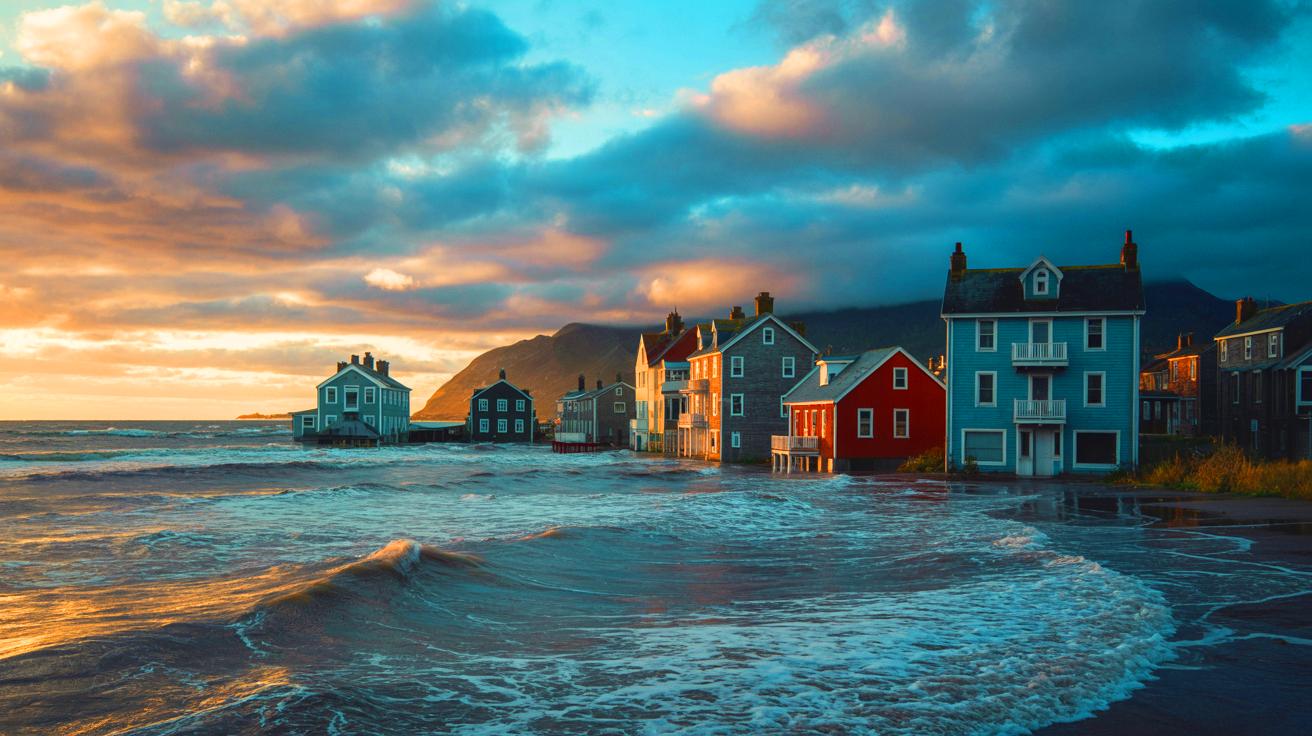
As climate change accelerates, rising sea levels pose an ever-increasing threat to coastal areas worldwide. Recent flood risk maps have revealed a daunting reality: entire towns could vanish beneath the waves if current trends continue. These maps, based on the latest scientific research, are a clarion call for action, highlighting regions at risk and underscoring the urgent need for comprehensive planning and intervention. The potential for widespread displacement and economic disruption is immense, urging communities and policymakers to reconsider their strategies for coastal resilience. With the stakes so high, understanding the depth of this threat is crucial for safeguarding our future.
The Science Behind Rising Sea Levels
Understanding the science behind rising sea levels is essential for grasping the magnitude of the threat faced by coastal communities. Primarily driven by climate change, the increase in global temperatures causes ice sheets and glaciers to melt, contributing to rising ocean levels. Furthermore, thermal expansion, where water expands as it warms, exacerbates this rise. According to the Intergovernmental Panel on Climate Change (IPCC), the global sea level has risen by approximately 8-9 inches since 1880, with the rate of increase accelerating significantly in recent decades. These scientific findings are crucial as they form the basis for the predictive models used in flood risk maps.
Moreover, localized factors such as land subsidence and ocean currents can amplify the impact of global sea-level rise in certain regions. For instance, areas like the eastern coast of the United States are experiencing sea-level rise at rates higher than the global average. The integration of these complex variables into predictive models allows researchers to create more accurate flood risk maps, which highlight the urgency for targeted policy interventions and adaptive measures. By grounding our understanding in scientific evidence, we can better prepare for and mitigate the effects of rising seas on vulnerable coastal areas.
Economic and Social Implications
The economic and social implications of rising sea levels are profound and far-reaching. Coastal towns, often the lifeblood of regional economies, face unprecedented threats to their livelihoods. As flooding becomes more frequent, property values are likely to plummet, affecting not only homeowners but also local governments that rely on property taxes for funding essential services. Additionally, infrastructure such as roads, bridges, and utilities is at risk, necessitating costly upgrades or relocations. The potential financial burden on both the public and private sectors is immense, underscoring the need for proactive planning and investment in resilience measures.
Socially, the impact of disappearing towns cannot be overstated. Communities with deep historical roots and cultural significance may face extinction, leading to the loss of heritage and identity. The displacement of populations due to flooding will also exacerbate existing social inequalities, as disadvantaged groups often lack the resources to relocate or adapt. This could result in increased migration pressures on urban centers, straining resources and potentially leading to social unrest. Addressing these challenges requires a holistic approach that considers both the economic and social dimensions of the crisis, ensuring that solutions are equitable and sustainable.
Current Mitigation Strategies
Current mitigation strategies for addressing the threat of rising sea levels and coastal flooding are diverse, ranging from structural interventions to policy-driven initiatives. One common approach is the construction of physical barriers such as sea walls and levees, designed to protect vulnerable areas from storm surges and high tides. While these structures can be effective in the short term, they are often costly and may not be sustainable in the face of long-term sea-level rise. Consequently, there is a growing emphasis on nature-based solutions, such as the restoration of wetlands and mangroves, which can serve as natural buffers against flooding while also providing ecological benefits.
Policy measures are equally important in mitigating flood risks. Many governments are implementing stricter building codes and land-use regulations to discourage development in high-risk areas. Additionally, some regions are investing in adaptive infrastructure, such as floating buildings and amphibious homes, which can withstand fluctuating water levels. Insurance schemes and financial incentives are also being explored to encourage property owners to invest in flood-proofing measures. These strategies highlight the importance of a multifaceted approach that combines engineering, policy, and community engagement to enhance coastal resilience.
The Role of Technology in Predicting and Preventing Disasters
Technology plays a critical role in both predicting and preventing disasters in coastal areas threatened by rising sea levels. Advanced satellite imagery and remote sensing technologies allow scientists to monitor changes in ice sheets, sea levels, and coastal erosion with unprecedented accuracy. These data are integral to the development of sophisticated flood risk maps, which provide vital information for decision-makers and communities alike. Furthermore, Geographic Information Systems (GIS) enable the visualization of complex data, helping to identify areas most at risk and prioritize interventions.
In addition to predictive technologies, innovative solutions are being developed to prevent and mitigate the impacts of flooding. Smart infrastructure, equipped with sensors and real-time monitoring systems, can provide early warnings of impending floods, allowing for timely evacuations and emergency responses. Furthermore, advances in materials science are leading to the development of flood-resistant construction materials and designs, enhancing the durability of buildings in flood-prone areas. The integration of technology into disaster preparedness and response strategies is crucial for enhancing the resilience of coastal communities in the face of an uncertain future.
As we confront the stark realities presented by flood risk maps, the question remains: how will we adapt to this terrifying future for coastal areas? The potential disappearance of whole towns challenges us to rethink our relationship with the environment and to innovate in ways that were previously unimaginable. By leveraging science, technology, and a commitment to sustainability, can we transform this looming crisis into an opportunity for resilience and renewal?
Did you like it?4.6/5 (26)