What you need to know
- 📷 Surveillance cameras are ubiquitous in urban areas, with millions installed worldwide, raising significant privacy concerns as they monitor nearly every public space.
- ⚖️ The challenge lies in balancing security and privacy; while cameras enhance safety and assist law enforcement, they can also threaten civil liberties if not properly regulated.
- 🤖 The ethical implications of surveillance technology are profound, especially with advancements like facial recognition, which can lead to privacy invasions and discrimination.
- 🔮 The future of privacy is uncertain as surveillance technology evolves, with society needing to address how to protect individual rights amidst these advancements.
- 📢 Growing awareness of privacy issues is sparking movements for digital rights and data protection, demanding transparency and control over personal information.
In today’s world, the presence of surveillance cameras is more pervasive than ever, leading to growing concerns about privacy and personal freedom. These devices, once limited to high-security areas, have now spread into every corner of public life. They are in our streets, our workplaces, and even in our homes, blurring the lines between security and intrusion. As technology advances, the capability of these surveillance systems has increased dramatically, raising significant ethical and legal questions. This article explores the implications of living in a surveillance society, the balance between security and privacy, and the potential consequences for our personal freedoms.
The Ubiquity of Surveillance Cameras
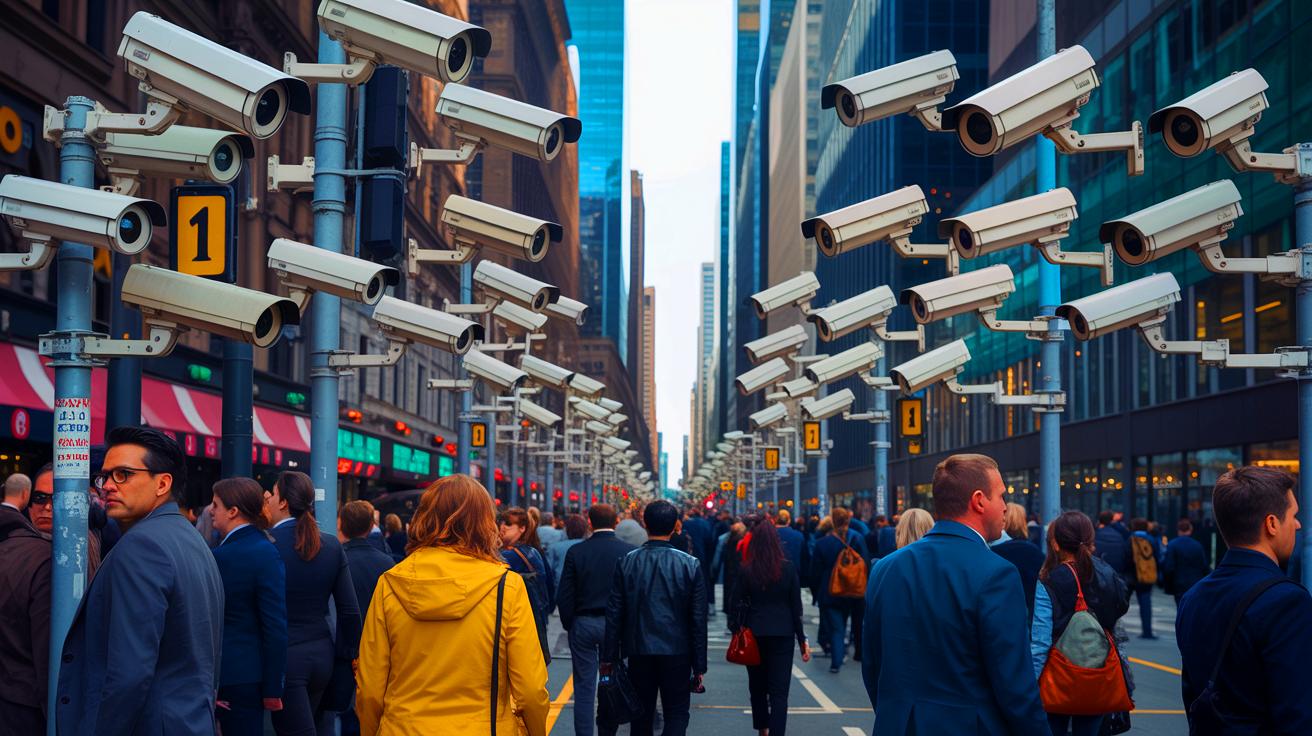
Surveillance cameras have become an inescapable part of urban landscapes. From traffic lights to shopping malls, nearly every public space is under constant watch. Governments and corporations justify this expansion as a necessary measure to ensure safety and deter crime. However, the sheer number of cameras raises privacy concerns among citizens. According to recent estimates, there are millions of public cameras in major cities worldwide, and their numbers continue to grow. In some cities, the ratio of cameras to people is as high as one to five, illustrating how deeply embedded these devices have become in urban life.
While the benefits of surveillance are often highlighted, such as reduced crime rates and improved public safety, the trade-off is a significant erosion of personal privacy. Citizens are often unaware of the extent to which they are being monitored, leading to a sense of unease and mistrust. The constant observation can create a chilling effect, where individuals feel they must alter their behavior due to the possibility of being watched. As cameras become more sophisticated, with features like facial recognition and real-time data analysis, the potential for misuse and abuse of surveillance technology grows.
Balancing Security and Privacy
Finding the right balance between using surveillance for security and protecting individual privacy is a complex challenge. Proponents argue that surveillance cameras are crucial for maintaining public order and preventing terrorism. They claim that these devices help law enforcement agencies respond quickly to incidents and gather evidence for investigations. However, critics warn that the unchecked expansion of surveillance poses a threat to civil liberties. They argue that without proper regulations and oversight, these technologies can be used to control and oppress citizens.
The key to balancing security and privacy lies in establishing clear guidelines and accountability measures. Governments must ensure that surveillance is conducted transparently and that citizens are informed about where and how they are being monitored. Additionally, there must be strict limits on the collection and use of personal data to prevent abuse. By involving the public in discussions about surveillance policies and implementing robust legal frameworks, societies can find a middle ground that respects both security needs and personal freedoms.
The Ethical Implications of Surveillance Technology
The rise of surveillance technology brings forth significant ethical dilemmas. The ability to monitor individuals’ movements and behaviors so intimately raises questions about autonomy and consent. Facial recognition technology, for instance, can identify individuals in real-time without their knowledge or permission. This level of scrutiny challenges the very notion of anonymity in public spaces and can lead to discrimination and profiling.
Moreover, the deployment of surveillance systems often disproportionately affects marginalized communities, who may already face heightened scrutiny from law enforcement. The lack of diversity in the tech industry also means that surveillance algorithms can be biased, leading to errors and misidentifications. As surveillance technology becomes more advanced, ethical considerations must be at the forefront of its development and implementation. Citizens and policymakers must engage in open dialogues about the moral implications of these technologies to ensure they are used responsibly and equitably.
The Future of Privacy in a Surveillance Society
As surveillance technology continues to evolve, the future of privacy remains uncertain. The introduction of advanced systems, such as drones and artificial intelligence, promises even greater surveillance capabilities. These technologies can provide comprehensive monitoring, predicting behaviors, and even influencing decisions. As a result, the perception of privacy may shift, with individuals accepting reduced privacy as an inevitable consequence of modern life.
However, the growing awareness of privacy issues has sparked movements advocating for digital rights and data protection. Individuals are increasingly demanding more control over their personal information and greater transparency from organizations that collect data. These demands may lead to stricter regulations and the development of privacy-preserving technologies. The future of privacy will depend on how societies address the challenges posed by surveillance, balancing technological advancements with the protection of individual rights.
The pervasive spread of surveillance cameras raises critical questions about the balance between safety and privacy. While these technologies offer undeniable benefits, they also pose significant risks to personal freedoms and civil liberties. As we continue to navigate this surveillance society, it is imperative to engage in thoughtful discussions about the ethical and legal implications. How can we ensure that advancements in surveillance technology do not come at the expense of our fundamental rights and freedoms?
Did you like it?4.4/5 (29)
Est-ce que quelqu’un sait comment on peut exiger plus de transparence sur ces caméras? Ça devient flippant! 😨
Merci pour cet article, il est temps que les gens réalisent à quel point notre vie privée est menacée.
Serait-il possible d’avoir une liste des villes avec le plus de caméras pour éviter ces endroits?
Wow, j’ai toujours su que Big Brother nous regardait, mais pas à ce point-là!
Est-ce que les caméras améliorent vraiment la sécurité ou est-ce juste une excuse pour nous surveiller?
Super article! Peut-être qu’on devrait tous commencer à porter des masques pour éviter la reconnaissance faciale. 🕵️♀️
La technologie de surveillance avance vite, mais où est la ligne rouge entre sécurité et liberté?
J’espère qu’on va voir plus de mouvements pour les droits numériques, c’est crucial!
Les caméras sont partout… je me sens comme une célébrité, mais sans la célébrité 😂
Quelles mesures peut-on prendre individuellement pour protéger notre vie privée contre cette surveillance omniprésente?