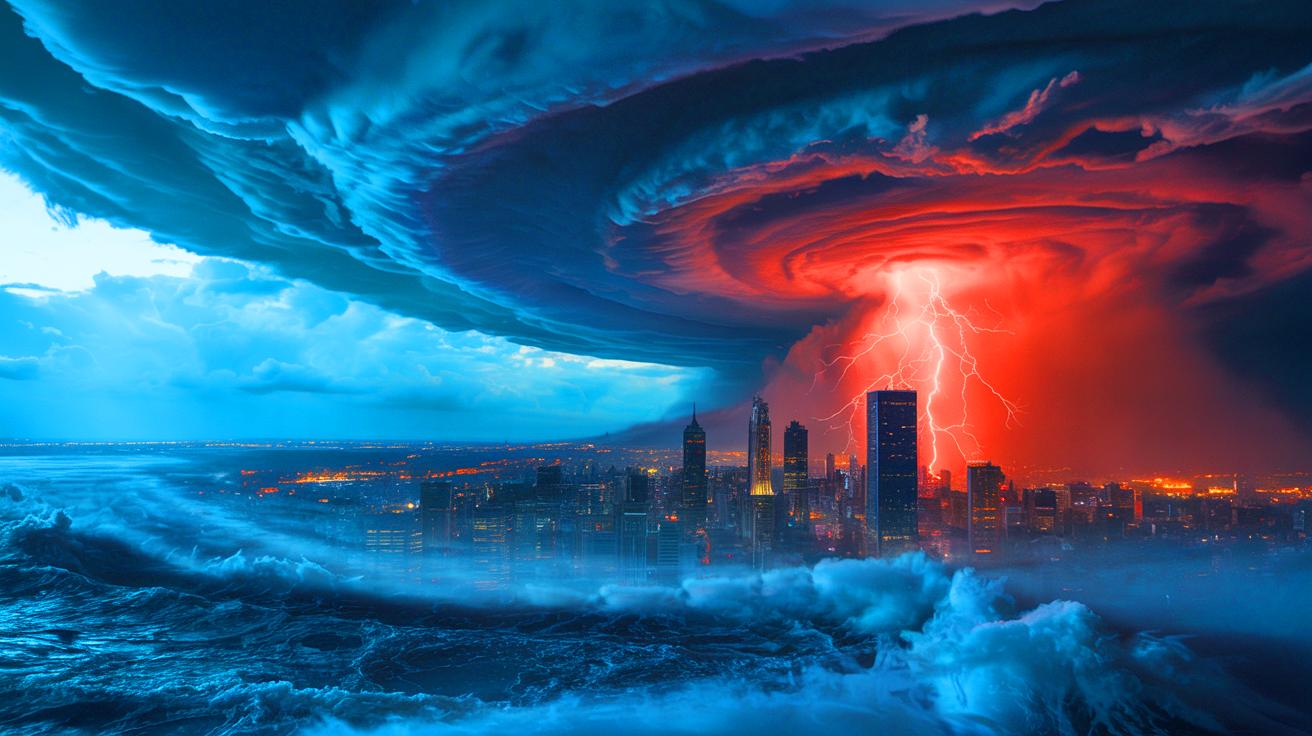
What you need to know
- 🌍 Climate Change Science: Human activities, especially fossil fuel combustion, are raising greenhouse gas levels, leading to global warming and altering weather patterns.
- 🌪️ Rising Extreme Weather Events: Increasing global temperatures contribute to more intense hurricanes, heatwaves, droughts, and wildfires, posing severe risks to ecosystems and human health.
- 💰 Economic and Social Impact: Climate-related disasters result in massive economic losses and exacerbate social inequalities, hitting vulnerable communities the hardest and leading to displacement and resource conflicts.
- 🌱 Call for Global Action: Urgent measures are needed to enhance commitments under the Paris Agreement, transition to renewable energy, and implement conservation efforts to mitigate climate change.
- 🤝 Collective Responsibility: A unified global effort involving governments, businesses, and individuals is essential in addressing the climate crisis and securing a sustainable future.
As the planet grapples with the mounting pressures of climate change, scientists and experts are sounding the alarm on the increasing frequency and intensity of extreme weather events. From devastating hurricanes to unprecedented heatwaves, the signs are becoming impossible to ignore. Across the globe, communities are witnessing firsthand the destructive power of nature, with catastrophic consequences for human life and the environment. This article delves into the insights provided by climate experts, who are urging immediate action to mitigate the impacts of what many describe as a looming disaster.
The Science Behind Climate Change
The science of climate change is rooted in the understanding of how human activities, particularly the burning of fossil fuels, contribute to the greenhouse effect. This process involves the trapping of heat in the Earth’s atmosphere, leading to a rise in global temperatures. In recent decades, the concentration of carbon dioxide and other greenhouse gases has reached unprecedented levels. According to the Intergovernmental Panel on Climate Change (IPCC), the planet’s average temperature has already increased by approximately 1.2 degrees Celsius since the pre-industrial era. This seemingly small change has far-reaching implications for weather patterns, ocean currents, and ecosystems.
Experts emphasize that the current trajectory of emissions will lead to even more dramatic climate changes. The feedback loops, such as melting polar ice reducing the Earth’s albedo, further exacerbate the problem. Without significant reductions in emissions, the world is on track to exceed the critical threshold of 1.5 degrees Celsius warming, beyond which the effects become drastically more severe.
Impacts of Extreme Weather Events
The increase in global temperatures is directly linked to the rise in extreme weather events. Hurricanes, for instance, are becoming more intense and frequent, with warmer ocean temperatures providing more energy for these storms. The 2020 Atlantic hurricane season was one of the most active on record, with 30 named storms causing widespread destruction. Similarly, heatwaves are becoming longer and more intense, leading to severe health risks and increased mortality rates. The European heatwave of 2019, for example, broke temperature records across the continent and resulted in thousands of heat-related deaths.
Moreover, droughts and wildfires are ravaging ecosystems and communities. The 2020 Australian bushfires, fueled by prolonged drought and high temperatures, burned millions of acres and displaced thousands of people. These events highlight the urgent need for adaptive measures to protect vulnerable populations and ecosystems. Without significant intervention, experts warn that such events will become the new norm, with devastating consequences for both human and natural systems.
Economic and Social Consequences
The economic and social impacts of climate change are profound and far-reaching. The damage caused by extreme weather events can cripple economies, with recovery costs running into billions of dollars. For instance, the cost of damages from Hurricane Katrina in 2005 was estimated at over $160 billion. Developing countries, with limited resources and infrastructure, are particularly vulnerable, facing disproportionate impacts and challenges in recovery.
Socially, climate change exacerbates existing inequalities. Vulnerable populations, such as low-income communities and indigenous peoples, often bear the brunt of climate impacts due to their limited capacity to adapt. Migration and displacement are becoming more common as people are forced to leave their homes in search of safer environments. This, in turn, can lead to increased tension and conflict over resources. Addressing these issues requires a comprehensive approach that includes both mitigation and adaptation strategies to build resilient communities.
Urgent Call for Global Action
In light of these challenges, climate experts are calling for urgent global action. The Paris Agreement, achieved in 2015, represents a critical step towards international cooperation in reducing emissions and limiting global warming. However, many argue that the commitments made under the agreement are not sufficient to avert the worst impacts of climate change. Experts stress the need for countries to enhance their Nationally Determined Contributions (NDCs) and implement more ambitious policies.
Transitioning to renewable energy sources, such as wind and solar power, is crucial in reducing reliance on fossil fuels. Additionally, reforestation and conservation efforts play an essential role in sequestering carbon and preserving biodiversity. The involvement of all sectors, from governments and businesses to individuals, is necessary to drive meaningful change. The question remains: Will the global community rise to the challenge and take the decisive action needed to prevent further disaster?
The evidence is clear: climate change poses an existential threat that cannot be ignored. As extreme weather events become more frequent and severe, the pressure on governments, industries, and individuals to act is intensifying. The path forward requires collaboration, innovation, and a commitment to sustainable practices. As we confront this crisis, we must ask ourselves: How can we mobilize the will and resources to secure a livable future for generations to come?
Did you like it?4.6/5 (29)
Merci pour cet article informatif ! C’est effrayant mais essentiel de savoir ce qui nous attend.
Peut-on vraiment encore inverser la tendance ou est-ce déjà trop tard ? 🤔
J’espère que nos dirigeants prendront enfin ces avertissements au sérieux avant qu’il ne soit trop tard !
Est-ce que les solutions technologiques actuelles suffiront pour réduire les émissions de CO2 ?
Est-ce que quelqu’un sait combien coûte vraiment la transition vers les énergies renouvelables ?
Et dire que certains pensent toujours que le changement climatique est un mythe… 🙄
Quelle est la différence entre les engagements de l’Accord de Paris et les actions réellement entreprises ?
Merci pour ces éclaircissements. Plus de gens devraient lire ce genre de contenu !
Les feux de forêt et les ouragans sont-ils vraiment plus fréquents ou est-ce juste une perception ?
Quel impact a la fonte des glaces sur le niveau de la mer et les populations côtières ? 😟
C’est terrifiant de voir à quel point nous avons déjà affecté notre planète. Que pouvons-nous faire à notre échelle ?