What you need to know
- 🔍 Facial recognition technology has rapidly evolved, becoming a key tool for corporations in various applications, from security to customer service.
- 🔒 Privacy concerns arise from the potential for surveillance overreach, constant monitoring, and lack of transparency in data collection and usage.
- ⚖️ Ethical dilemmas include biased algorithms leading to potential discrimination and the need for transparent data policies and explicit consent.
- 📜 Regulatory efforts are underway, with examples like the EU’s GDPR, but more comprehensive global frameworks are needed to address these challenges.
- 🤔 The future of facial recognition in business hinges on responsible innovation, balancing technological advancement with individual rights and freedoms.
In recent years, the rapid advancement and deployment of facial recognition technology have sparked a robust debate over privacy, ethics, and the balance between security and personal freedoms. As corporations increasingly adopt this technology for various applications ranging from security to customer service, concerns have grown over how this data is collected, stored, and used. While some argue that facial recognition enhances safety and efficiency, others warn of the potential for surveillance overreach and loss of privacy. This article explores the burgeoning concerns surrounding corporate use of facial recognition technology and its far-reaching implications.
The Rise of Facial Recognition Technology
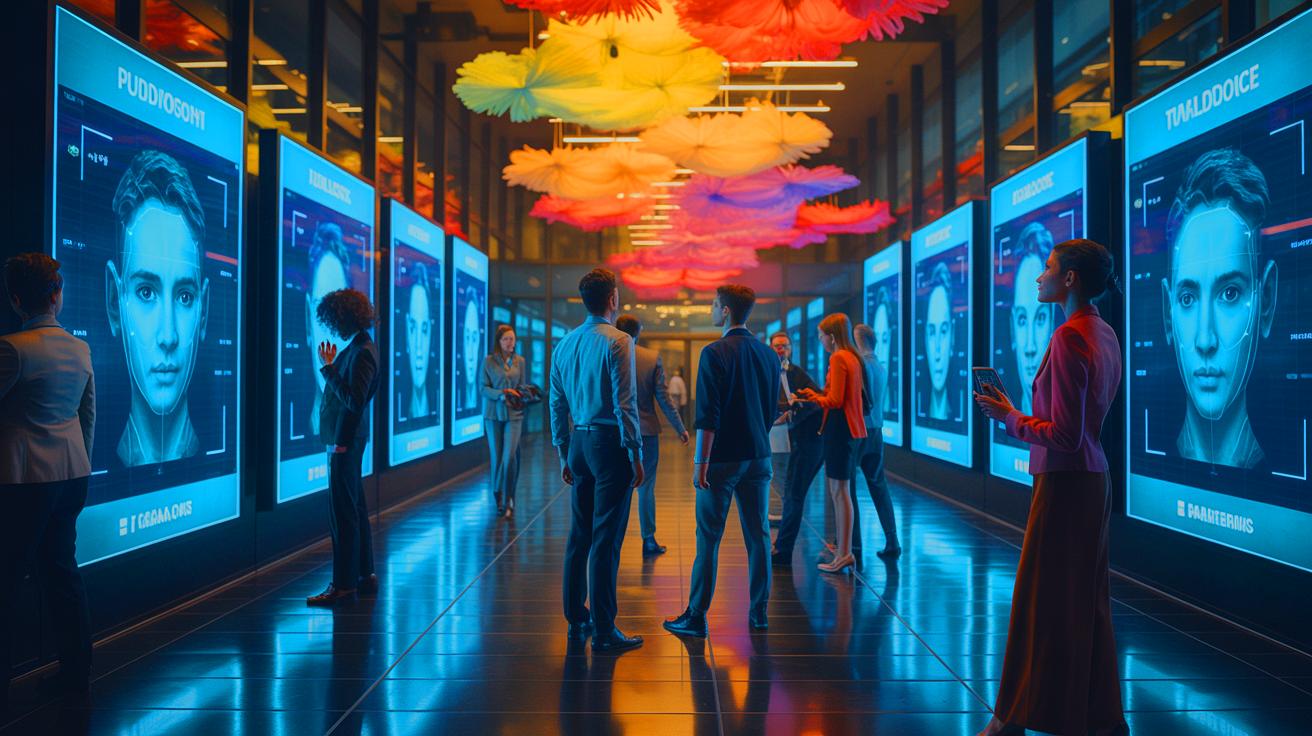
Facial recognition technology has evolved remarkably over the past decade, transitioning from a futuristic concept to a common tool utilized by many corporations. Initially developed for security and law enforcement, it now finds applications in everyday business operations. Companies use it for identity verification, targeted advertising, and even to enhance customer experiences by personalizing services. The technology works by analyzing unique facial features and matching them against a database, often in real time. While it offers undeniable benefits, such as speeding up security checks and reducing fraud, the rapid adoption by corporations has raised critical questions about privacy and consent. As corporations continue to harness this technology, the line between innovation and intrusion becomes increasingly blurred.
Privacy Concerns and Ethical Dilemmas
One of the paramount concerns surrounding the use of facial recognition technology is its impact on privacy. Critics argue that constant monitoring can lead to a surveillance society, where individuals are perpetually watched and analyzed without their explicit consent. This technology has the potential to track movements, analyze behavior, and even predict actions, all of which raise ethical questions. Moreover, there is a lack of transparency about how data is stored, who can access it, and how long it is kept. Ethical dilemmas also arise when considering the accuracy of the technology; studies have shown that it can be biased, with higher error rates for women and people of color, leading to potential discrimination. As corporations wield this powerful tool, the need for stringent regulations and ethical guidelines becomes ever more pressing.
Corporate Responsibility and Regulation
With the growing use of facial recognition technology, the responsibility falls on corporations to ensure ethical implementation. Companies must strive to balance innovation with respect for individual privacy rights. This involves adopting transparent data policies, obtaining explicit consent, and ensuring that data usage aligns with the principles of fairness and accountability. Regulatory bodies worldwide are beginning to take notice, with some regions enacting laws to curb misuse. The European Union’s General Data Protection Regulation (GDPR) is a prime example of legislation that seeks to protect personal data and privacy. However, the regulatory landscape is still fragmented, and more comprehensive frameworks are needed to address the global nature of data sharing and the unique challenges posed by facial recognition technology.
The Future of Facial Recognition in Business
As technology continues to advance, the future of facial recognition in business remains uncertain but undeniably significant. On one hand, it promises enhanced security, streamlined operations, and personalized customer interactions. On the other hand, it poses risks of privacy invasion and ethical conflicts. The key to harnessing its potential lies in responsible innovation, where businesses prioritize transparency, consent, and data protection. As the debate over facial recognition technology intensifies, corporations must navigate the complex interplay between technological capabilities and societal values. How they choose to address these challenges will shape the future landscape of privacy and technology.
The ongoing dialogue surrounding facial recognition technology raises important questions about the balance between technological advancement and personal privacy. As corporations adopt these systems, they must grapple with the ethical implications and the potential for misuse. How can businesses ensure that they use this powerful tool responsibly, while safeguarding individual rights and freedoms? This pivotal question remains at the heart of the debate, urging stakeholders to consider what kind of society we want to live in and how facial recognition technology fits within that vision.
Did you like it?4.5/5 (29)
Do you think facial recognition technology can ever truly be unbiased or is it inherently flawed?
Thanks for shedding light on this important issue! It’s crucial we discuss these implications. 😊
Isn’t it ironic that technology meant to protect our security is now a threat to our privacy?
Great article! But how can we ensure that the data collected is used ethically?
Wait, are we heading towards a real-life Black Mirror episode with all this surveillance? 😅
Given the privacy concerns, should there be a global ban on facial recognition technology?
Merci pour cet article. J’espère que les entreprises prendront ces préoccupations au sérieux.
Honestly, I feel a bit uneasy knowing that my face could be tracked everywhere I go.
How do we balance technological innovation with our fundamental rights? This is a tough one!
Wow, I didn’t realize the extent of facial recognition’s impact. Food for thought indeed!
Why aren’t more companies transparent about their data policies? It’s 2023, c’mon! 🤔
Is it just me, or does facial recognition sound like something straight out of a dystopian novel?
What can individuals do to protect their privacy against the misuse of this technology?