What you need to know
- 🌍 Global Trend: Foreign investment in farmland is rising, especially in regions like Africa, Latin America, and Southeast Asia, driven by the need to secure resources for food, biofuels, and raw materials.
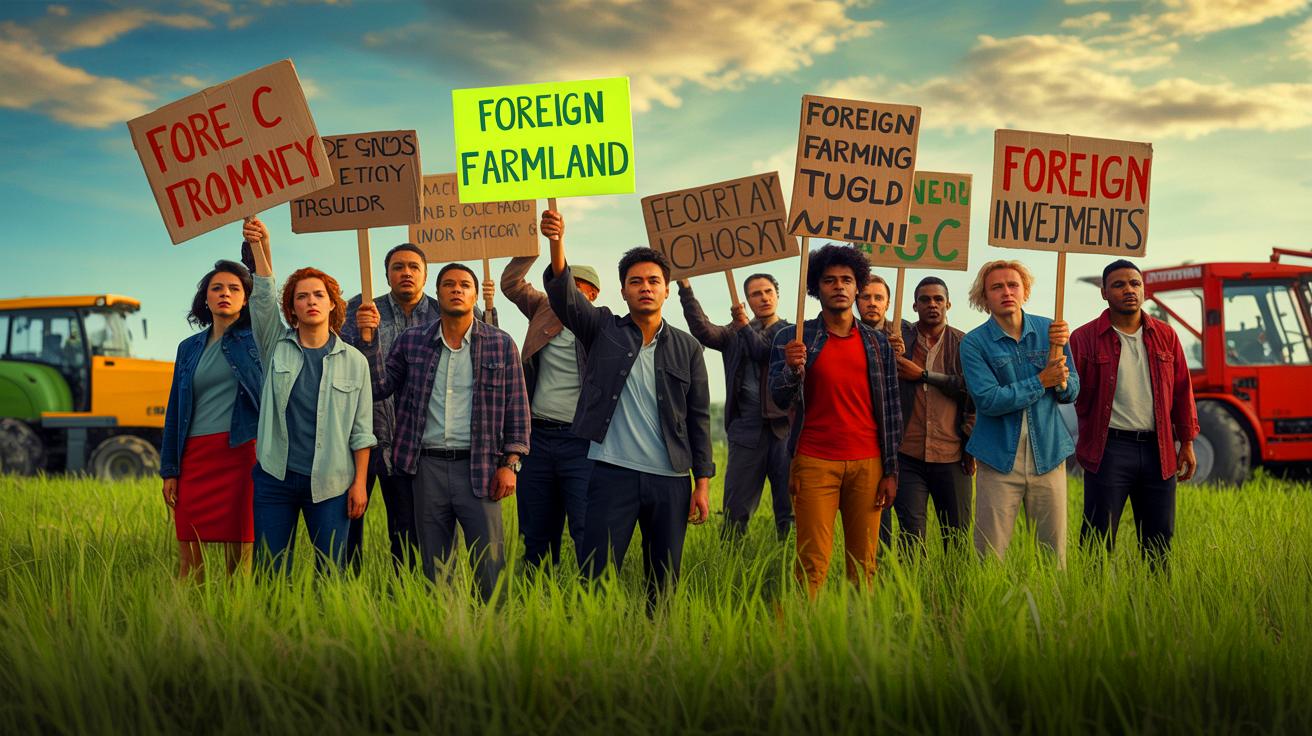
- 🏡 Local Impact: These acquisitions often lead to displacement and loss of resources for local communities, sparking protests as they struggle with the disruption of traditional ways of life.
- 🌱 Environmental Concerns: Large-scale agricultural projects by foreign investors frequently prioritize profit over sustainability, causing deforestation, soil degradation, and threats to biodiversity.
- ⚖️ Regulatory Challenges: Many countries lack robust frameworks to manage foreign farmland investments, necessitating improved regulations, transparency, and fair compensation for local communities.
- 🤝 Balancing Interests: The ongoing debate emphasizes the need for solutions that respect both investor interests and the rights of local populations, ensuring equitable and sustainable development.
Across the globe, the issue of farmland acquisition by foreign investors is sparking heated debates. As the demand for arable land intensifies, many local communities are increasingly concerned about the implications of such investments. This trend, often referred to as “land grabbing,” has led to widespread protests with slogans like “They’re stealing our future,” highlighting the perceived threat to local autonomy, food security, and cultural heritage. This article delves into the complexities surrounding these acquisitions, exploring the motivations of investors, the reactions of communities, and the broader impact on global agriculture.
The Rise of Foreign Farmland Investment
In recent decades, the acquisition of farmland by foreign entities has surged, driven by the rising global demand for food, biofuels, and raw materials. Emerging economies and wealthy nations alike are investing in agricultural lands to secure their future needs. This trend is particularly pronounced in regions such as Africa, Latin America, and Southeast Asia, where land is relatively cheap and abundant. Governments in these regions often welcome foreign investments as a means to boost economic development and modernize agriculture. However, this practice has sparked controversy and resistance from local communities, who view it as a threat to their livelihoods and sovereignty. The question remains: is this a necessary development or a form of neo-colonialism?
The Impact on Local Communities
When foreign investors purchase farmland, the effects on local communities can be profound. Often, these lands are integral to the identity and survival of indigenous populations, who may not have formal ownership documentation. As lands are sold, communities face displacement, loss of access to resources, and disruption of traditional ways of life. The promise of job creation and infrastructure development frequently falls short, leaving locals with few tangible benefits. Protests erupt as communities demand a voice in decisions that affect their future. The clash between economic interests and social justice is stark, with many arguing that the long-term costs far outweigh the immediate benefits.
Environmental Concerns and Sustainability
The environmental impact of foreign farmland acquisitions cannot be overlooked. Large-scale agricultural projects often prioritize short-term gains over sustainable practices, leading to deforestation, soil degradation, and water scarcity. These activities can have devastating effects on local ecosystems, threatening biodiversity and traditional farming methods. Critics argue that foreign investors prioritize profit over environmental stewardship, raising questions about the sustainability of such practices. As the world grapples with climate change, the need for sustainable land management is more pressing than ever. How can we balance economic interests with the imperative to protect our planet?
Regulatory Challenges and Solutions
Regulating foreign investments in farmland is a complex task, as it involves navigating international laws, local customs, and economic policies. Many countries lack comprehensive frameworks to manage these acquisitions, leading to exploitation and conflict. Strengthening regulations, enforcing transparency, and ensuring fair compensation for affected communities are essential steps in addressing this issue. Some countries are beginning to implement measures such as land-use planning and community consultation processes to protect local interests. However, the effectiveness of these solutions depends on political will and international cooperation. Can global governance provide a framework that balances investment and local rights?
As the debate over foreign farmland investment continues, the stakes remain high. The balance between economic growth and social justice is delicate, and the decisions made today will shape the future of agriculture and rural communities worldwide. With protests gaining momentum and awareness increasing, the call for equitable and sustainable solutions grows louder. Ultimately, the challenge lies in finding a path that respects both the needs of investors and the rights of local populations. In a rapidly changing world, how can we ensure that development benefits all stakeholders and preserves the heritage of those who have tended the land for generations?
Did you like it?4.5/5 (22)
Comment peut-on s’assurer que les communautés locales bénéficient réellement de ces investissements étrangers ? 🤔
Merci pour cet article éclairant. C’est un sujet dont on devrait parler plus souvent !
Est-ce que quelqu’un a des exemples de pays où ce genre de problème a été bien géré ?
C’est vraiment triste de voir comment les traditions locales sont ignorées pour le profit.
J’ai toujours pensé que les investissements étrangers étaient bénéfiques. Ce post me fait réfléchir à deux fois.
Peut-être qu’on devrait aussi se préoccuper de l’impact environnemental au lieu de juste parler d’économie.
On dirait que les gouvernements locaux ferment les yeux sur les conséquences pour les communautés. Qui devrait être tenu responsable ?
Franchement, pourquoi ne pas investir dans des pratiques agricoles durables dès le départ ? 🙄